Gravel Roofs on Storefronts
Built-up gravel roofs on older storefronts lose their gravel cover and crack at the bitumen. Once blisters split, the roof comes off to the deck. The deck under them often needs repair before new board goes down.
As a Superior commercial roofing contractor, we install TPO, EPDM, and metal roofs on storefronts and ag buildings, with staging planned before tear-off.
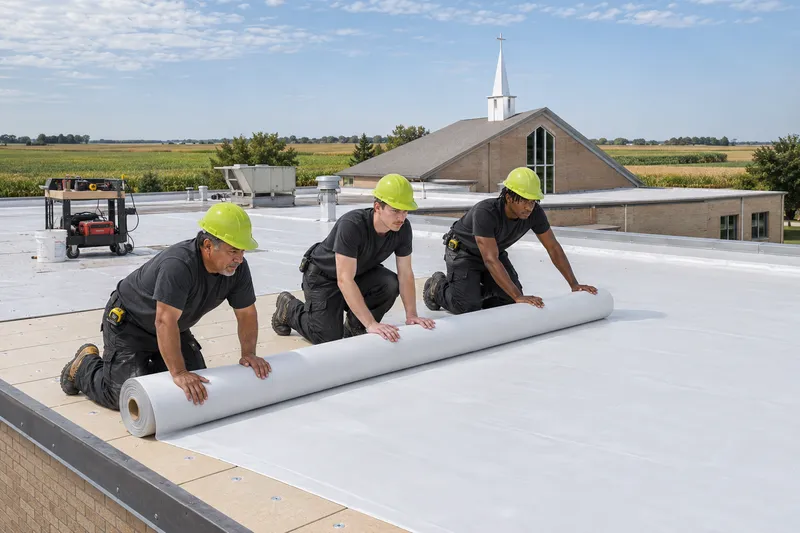
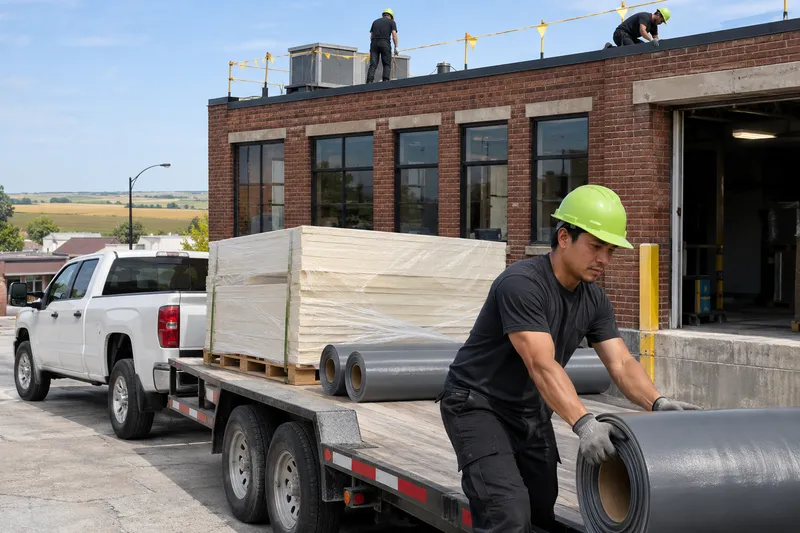
Superior commercial roofing jobs run on a staging plan, because every board, roll, and dumpster travels in from Hastings. Material arrives in planned loads sized to each section, so the roof never sits open waiting on a truck.
On downtown blocks, the crane spot, sidewalk cover, and dumpster are set with the town before day one, and alley access is kept open for neighbors.
These are the conditions that turn a Superior storefront or ag roof from patching into a new roof.
Built-up gravel roofs on older storefronts lose their gravel cover and crack at the bitumen. Once blisters split, the roof comes off to the deck. The deck under them often needs repair before new board goes down.
Many downtown roofs drain through scuppers to the alley. Leaves and gravel block them, and water backs up against the parapet. Parapet flashing next to a blocked scupper takes the first hit.
Steel roofs over grain and equipment buildings rust at laps and fastener holes. Replacement panels or a full new roof stop the drips onto stored goods. Stored grain and equipment below stay wet until the roof is fixed.
Rooftop units set on low curbs leave too little height for flashing. New curbs raise them before the new roof goes on. Low curbs also trap drifting snow against the unit housing.
Foot traffic around a roof hatch cracks membrane and lets water into the board. Core cuts there show how far it spread. Wet board spreads well past the hatch before a stain appears.
Storm hail leaves cracks and dents across aged roof surfaces. A roof walk after a storm shows whether repair or replacement fits. Core cuts after a storm show whether water reached the insulation.
All four systems are available for Superior roofs. These lines show where each one fits best in town.
Flat storefront and office roofs downtown, where a white welded sheet replaces old gravel roofs.
TPO Roofing detailsRoofs with many vents and pipes, where flexible rubber flashing closes every opening.
EPDM Roofing detailsGrain-handling and processing buildings with dust, equipment, and work that has to keep running.
Industrial Roofing detailsAg storage and equipment buildings with pitched steel roofs that need new panels.
Commercial Metal Roofing detailsSend the address and roof type. We plan the staging along with the scope so the crew and the material arrive together.
What a Superior roof shows before the job, and what is in place when the crew leaves.
Out-of-town jobs follow a tight order so trucks, crane, and crew line up each day.
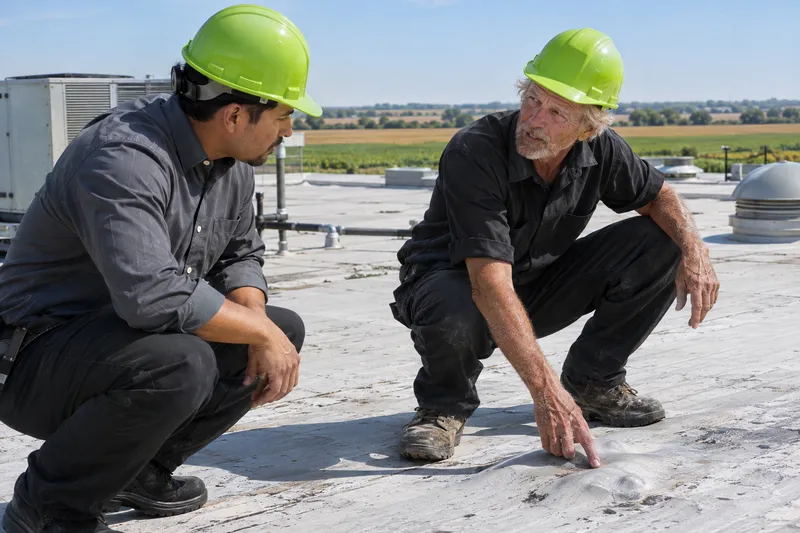
We walk the roof, take core cuts, and photograph scuppers, curbs, and seams, then measure the alley and street for staging room.
Crane spot, dumpster location, and sidewalk cover for the roof job get confirmed with the town. Delivery loads are matched to the tear-off schedule.
Insulation and membrane arrive in loads sized to each roof section, which keeps the alley clear for neighbors and deliveries.
Each section comes down to the deck, gets new board and membrane, and closes watertight before the crew drives back.
Scuppers, curbs, and walls get flashed last. The alley gets swept, and we walk the finished roof with you.
Superior sits in our service area with Hastings and four other towns.
Building in another town? Please call us or send us a message.
Our home base, with TPO, EPDM, industrial, and metal roofs across the city.
Brick downtown buildings where parapets and scuppers shape the roof.
Main-street flat roofs that need new insulation and parapet flashing.
Shop and co-op roofs where layer count and ponding set the scope.
Metal farm-service buildings that need new panels or framing.
Roof size, the system, tear-off, and the travel and staging to reach Superior shape the bid. Tight downtown access can add a crane or sidewalk protection, and wet board found during tear-off adds material. A line-item scope makes bids easy to compare.
Tear-off usually moves the number most. A gravel roof with two layers takes far more labor and hauling than one layer of single-ply, so the layer count from core cuts shapes the bid early.
Work runs one roof section at a time, with the dumpster and crane placed away from the front door. Noisy tear-off can start early or end before peak hours when the owner asks.
Yes. We roof grain-handling, equipment, and storage buildings in and around Superior, using steel panels on pitched roofs and membrane on flat processing areas.
Often a crane works from the alley, and a short street permit covers the rest. We confirm the plan with the town before any equipment arrives.
Most storefront roofs take a few working days once materials are on site, and weather sets the exact count. Each section is closed at day end, so the store stays dry between work days.
Gravel and bitumen come off with the rest of the old roof, and the debris is hauled away. Removing the gravel takes weight off the structure and leaves a clean deck for the new system.
Dust settles on roofs near grain handling and clogs drains and scuppers. The new roof gets strainers and clear drain paths, and a cleaning on the yearly roof walk keeps water moving.
Call or request an estimate. We walk the roof, plan the staging, and write one scope for both.